 Dynasty Nerds
  Draft Nerds
  NerdHerd

We are in the final part of our Dynasty Commissioner Series. We asked people on social media about questions and issues that come up in their dynasty leagues and tried to come up with solutions that could help commissioners navigate them. While every league is different, many of these challenges are more common than you might think, and hopefully some of these ideas for handling league issues can help keep your league running smoothly for years to come.
🔗 Build Your Dynasty

Payment Issue
One issue many commissioners deal with is getting leaguemates to pay their league dues for the season. Whether it’s an inactive manager (more on that later) or someone saying, “I’ll have the money soon,” or “Something is going on in life, can I get it to you in a few months?” excuses like these can put a commissioner in a tough situation.
As commissioners, we’re human. We care about our leaguemates, and if they’re a good member of the league, it’s natural to want to give them a break. However, that can create problems down the road. In a worst-case scenario, payments never get made, and sometimes it falls on the commissioner to make up the difference in league funds.
Solution
As far as inactive managers, I tend to set a deadline at the beginning of the offseason that league dues need to be paid by the rookie draft unless a manager has traded away future draft picks. Speaking of future draft picks, I don’t allow a trade to be approved if an owner has not paid their league dues when trading future picks at any point.
You need to set rules and bylaws in place up front so everyone knows the expectations. During the offseason, I set payment dates and send a one-month reminder, a two-week reminder, and a one-week reminder. If payment still hasn’t been made by then, I start looking for a replacement manager.
As for managers who ask for a break, saying things like, “I’ll have payment by my next payday,” or “Can I pay in a few months?” that ultimately falls on you as the commissioner. Have I done it before? Yes. Do I like doing it? Not really, but sometimes I’ve given managers I like a break. Should I? Probably not, especially when I’ve already provided a clear deadline for league dues.
Honestly, I view paid fantasy football leagues as a luxury. If you’re dealing with money issues, that’s unfortunate, but you probably shouldn’t be playing in paid fantasy leagues at that moment. It’s a brutal reality as a commissioner, but you can’t afford to let managers do whatever they want and continuously delay payment. Before you know it, the league could be $20, $50, or even more short, and either you have to cover the difference yourself or the league ends up paying out less in winnings.
Summary – Never let managers sell future picks without paying their dues first. Set a deadline for payment, make sure everyone knows it, and sadly sometimes you have to be tough. No pay, no play.
Ways to Introduce New Rule Issue
Commissioners often struggle with how and when to implement rule changes, whether it’s something small like draft order settings or something much bigger like scoring changes or lineup requirements. You have to think about when it’s appropriate to put these rules into effect and how many leaguemates should be on board with the change.
Do you allow leaguemates to bring up rule ideas, or should it only be a commissioner-driven process? Is it acceptable for a rule to pass even if it’s one you personally don’t want? These are questions almost every commissioner will face at some point, and there isn’t always a perfect answer.
Solution
There is never a right way to handle new rules in a league, as each league is its own unique environment. Some basic floor rules for handling new rules can make the process much easier.
In a standard 12-man league, my rule is a 75% approval rate for most rule changes. That would be 9 of the 12 members agreeing on a situation before a rule can pass. The only time I consider a simple majority is if it’s a new league starting up or a rule where there currently is no guidance and it isn’t a major change.
Common 75% approval rules include:
- How draft order or playoff seeding is determined
- When to hold the rookie draft
- Most general league rules
- Special rules for any of your unique league formats
One important note: none of these rule changes should take place after the start of the season. Once the season begins, all rules should remain in place unless something truly unforeseen happens. Those situations should be extremely rare. A good example would be a few years ago when the fantasy finals were impacted by the canceled Bills vs. Bengals game. That is the type of situation that may require an in-season ruling.
Big-time rule changes should require every member to be on board. You may have one or two managers who disagree, but you should try to find a middle ground that gets everyone comfortable with the change. Never should a league-altering rule be passed by a simple majority vote.
Thanks to the Dynasty Nerds Discord, I came across an interesting idea for handling major scoring and roster changes.
Rules like TE Premium or switching to Superflex, in my opinion, should have a two-year waiting period before they activate. These types of changes can dramatically alter player values and roster construction. On the scoring side, I saw an idea that can help leagues gradually move toward the desired setting.
For example, if your goal is a 0.5 TE Premium league, you could slowly phase it in:
- Year 1: 0.1 TE Premium
- Year 2: 0.25 TE Premium
- Year 3: 0.5 TE Premium
This allows managers to see some immediate benefit from the approved rule change while also giving everyone time to adjust their rosters instead of waiting years for the full change to arrive. Both approaches are valid, and it’s ultimately up to the commissioner and league.
Roster changes can be handled similarly. If your goal is to move to a format with 3 WRs, 3 RBs, or 2 TEs, you can gradually build toward it.
For example:
- Add an extra FLEX spot first
- Move to a WR/TE or RB/TE flex the following year
- Eventually transition to the standalone starting position
Just like scoring changes, roster changes should take a few years to kick in because they can dramatically change the landscape of the league.
As commissioner, you should absolutely allow leaguemates to suggest rule changes. It is their league too. Everything should be able to go through a vote no matter what the rule is. Now, you do have the right to veto a rule from being voted on. At the end of the day, you created the league, and there may be certain core rules or philosophies that are important to you. That right comes with being commissioner.
That said, you also need to be reasonable with your league mates. Being a dictator commissioner can leave a bad taste in everyone’s mouth and ultimately hurt the long-term health of the league.
Summary – Commissioners should use clear voting thresholds, avoid in-season rule changes, and gradually implement major scoring or roster adjustments while balancing league input with the long-term health of the league.

Tanking Issues
Tanking has been one of the biggest issues among commissioners when it comes to deciding how to handle it and what should actually be considered tanking. Tanking can create a lot of drama in fantasy leagues, especially when someone complains that another manager is facing a team that no longer cares about winning during the final few weeks of the season.
The question becomes: if a manager paid their dues and owns their team, should you really dictate what they do with their roster?
This is where many leagues run into problems because everyone seems to have a different definition of tanking. Is it trading away veterans for future picks? Is it starting younger players over aging veterans? Or is it intentionally leaving obvious points on the bench and not setting a competitive lineup?
For commissioners, the challenge isn’t stopping rebuilding teams. Rebuilding is a major part of dynasty fantasy football. The challenge is determining when rebuilding crosses the line into actions that negatively impact league integrity and competitive balance.
Solution
My two cents on tanking is that there is a difference between tanking and rebuilding.
Tanking is sitting all of your productive players and starting third-string backups, backup quarterbacks, or inactive and injured players. Rebuilding is selling off players for younger players and draft picks. You should not give up because you lost your top QB and top WR and then start backup players in order to get a better draft pick.
As commissioner, you need to have clear bylaws on what you expect from your league, despite people saying, “It’s my team and I paid for it.” You need to explain what is acceptable and what the limits of “tanking” are. Whether that means not allowing managers to start injured, inactive, or third- and fourth-string players who have not been regular starters for most of the season, make sure it is clearly defined.
You also want to minimize the incentive of trying to secure the No. 1 overall rookie pick. Some of the best ways to handle that include:
- Using Max Points For to determine rookie draft order.
- Using a lottery system for rookie draft order.
- Adjusting the schedule for the final three weeks so teams are grouped by current standings (1–4, 5–8, and 9–12). It’s not the ideal solution, but it can help.
- If you play on Sleeper, they provide a Best Possible Lineup report. Make it a league rule that managers must stay above a 60% threshold, and if they do not, warnings will be issued.
Don’t be afraid to establish punishments. Whether it’s a first warning, moving a manager back a spot in the rookie draft, losing a draft pick, or—at worst—removal from the league, commissioners need to set a precedent early.
If you allow tanking to become a problem from the start, it becomes much harder to correct later. Set the expectations, put them in the bylaws, and make sure every manager understands the rules before the season begins.
Summary – Commissioners should clearly define the difference between tanking and rebuilding, establish anti-tanking rules and penalties in their bylaws, and create systems that reduce the incentive to intentionally lose for better draft picks.
Bad Trades Issues
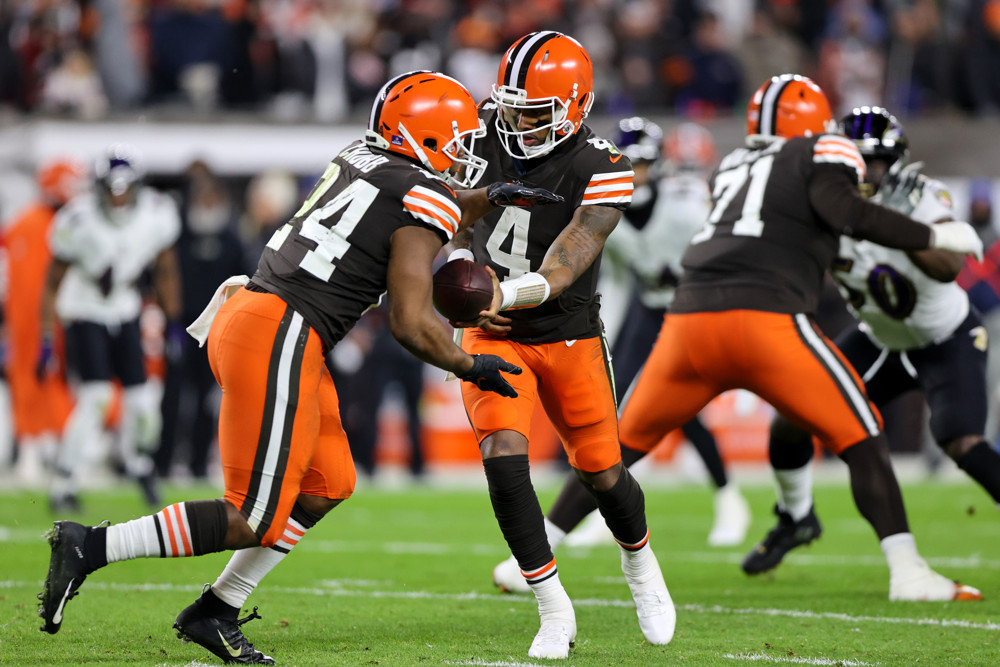
So many times leagues get mad when one of their leaguemates makes a horrible trade (going to avoid calling it collusion for now). A bad trade can alter a team very quickly, especially if a team is throwing away draft picks in order to win. As a commissioner, when should you step in on a leaguemate from continuing to make bad trades, or do you even step in?
Solution
As a commissioner, there is only so much you can do with bad trades unless there is clear evidence of collusion. As commissioner, you can educate managers and express that a trade may be poor value. Suggest using trade calculators to help managers get a fairer value on their trades.
When it comes to draft picks, make sure managers pay future league dues for any future picks they trade away. That can help teams rethink making certain deals and protect the league from managers selling off their future and leaving.
Even in situations where a trade seems extremely one-sided, I’m honestly reaching out to the manager who accepted the bad end of the deal and asking why they accepted it before I approve the trade. Unfortunately, if there is no collusion, you generally have to approve trades, even if you disagree with them.
One way to help prevent bad trades is to use Trade Counters instead of Trade Vetoes. Trade Counters allow a trade to sit for 24 hours after it has been accepted. During that time, other managers can reach out to either team and make a better offer. This creates a more open market and can help turn bad trades into fairer ones while still allowing managers to control their own teams.
Summary – As a commissioner, your role is to educate managers, protect the league from collusion, and create systems such as future dues requirements and trade counters that help prevent bad trades without taking away manager control of their teams.
Collusion Issues
What is collusion, and how do you handle it as a commissioner?
Solution
The collusion issue isn’t something that has an easy solution, but maybe it is. First, you have to be sure that collusion is actually happening. It’s important to spot the difference between true collusion and normal fantasy football activity.
Examples of collusion include:
- Two managers agreeing to make a trade with the understanding that the player will be traded back later.
- A non-playoff team giving away elite players for little value to help a friend win a championship.
- Managers coordinating lineups to intentionally help another team make the playoffs.
- Teams agreeing not to bid on a player so one manager can acquire them cheaply.
- A manager intentionally benching their best players to help a specific opponent win.
Not to be confused with:
- Bad trades where one manager simply values players differently.
- Aggressive rebuilding trades.
- A manager making a risky lineup decision that backfires.
A simple rule to live by for collusion is that it occurs when two or more managers work together for the benefit of one team at the expense of league integrity, rather than each manager acting in the best interest of their own team.
Unless you know for sure that groups are colluding, there isn’t much you can do. I’d keep an eye on owners who make moves similar to second set of the above bullet points and see if they eventually turn into the first set of bullet points in this section. If you feel collusion is happening, reach out to the owners and express your concerns in hopes that any potential collusion will be squashed before it becomes a bigger issue.
As commissioners, our job isn’t to punish managers based on assumptions. It’s to protect the integrity of the league while making sure every owner is acting in good faith. When clear evidence of collusion exists, action should be taken. Until then, communication and monitoring the situation are usually the best tools at our disposal.
Summary – Collusion occurs when two or more managers work together to benefit one team at the expense of league integrity, but commissioners should be careful not to confuse it with bad trades, rebuilding moves, or risky lineup decisions unless there is clear evidence of wrong doing.
Orphan Replacement Issues
It’s a commissioner’s job to fill teams that lose their manager for whatever reason. How should you go about filling an orphan team? What do you do when the orphan team is so bad? When should you bring in a new manager for said orphan team?
Solution
For orphan teams, the best way to fill them is to connect with different social media channels and post your orphan teams there. That’s the simple part of the issue. The hard part comes when it is a very bad orphan team and you’re having trouble finding someone willing to take it over unless it’s free or they only have to pay part of the entry fee. Of course, the best avenue is to continue waiting to find someone willing to pay the full amount.
One way to minimize bad orphan situations is to make sure teams still have their rookie picks. If they don’t, hopefully you made the previous manager pay future league dues before trading those picks away. That way, the orphan team can be offered for free to the next manager, making it much easier to fill.
Another way to help is to use a Dispersal Draft. For anyone unfamiliar, a dispersal draft is when you have two or more orphan teams and all of the players and assets from those teams are placed into a draft pool for the new owners to select from. This creates a more balanced and appealing situation for incoming managers. Even if there is only one orphan team, you can ask your other managers if anyone wants to shake up their roster and voluntarily enter their team into the dispersal draft as well.
Summary – The best way to handle orphan teams is to advertise them widely, protect future assets through prepaid dues, and consider using a dispersal draft to make struggling orphan teams more appealing to new managers.
Fighting/Rude Leaguemate Issues
I’ve dealt with this one plenty of times in leagues. As commissioner, how do you handle when leaguemates start getting into an argument—about whatever it may be? Especially when things escalate in conversation that should not be happening in group chat (or ever).
What process should a commissioner have when dealing with fighting and rude leaguemates?
Solution
This issue can be a tough one to control, as it can come out of nowhere and escalate quickly. The best way to handle it is to keep it out of the league group chat. If managers want to argue, tell them to take it to their DMs.
Use your best judgment when conversations start crossing the line. Sometimes a simple warning to knock it off or move the discussion to private messages is enough. The league chat is not the place for personal fights.
If it continues to happen, start issuing warnings and make it clear that continued behavior could result in removal from the league. Commissioners need to maintain a safe and fun environment for fantasy football, and fighting, harassment, and rude behavior should not be welcomed.
A toxic manager can make a league no longer enjoyable and can ultimately drive away good managers who would otherwise be valuable members of your league for years to come.
Summary – The best way to handle toxic managers is to keep arguments out of the league chat, issue warnings when behavior crosses the line, and be willing to remove repeat offenders to maintain a fun and welcoming environment for the league.
Inactive Leaguemate Issues
One of the biggest issues among commissioners is how do you deal with inactive players? What can you do to prevent such a big issue? At what point do you remove a person who is so inactive that it kills the morale of the league?
Solution
Inactive managers can be very hard to keep active, but there are a few ways to help prevent managers from disappearing. One of the best things you can do is find ways to spice up your league or create wacky, creative league formats that require activity. Sometimes, you also need to take advantage of the regular season when everyone is already around.
If you want to poll league changes, it is usually better to do them during the season when everyone is more active and available to vote. Activity should be treated like league payments. You need to participate if you want to keep playing. Not everyone needs to be around 24/7, but managers should be available at least once a week, especially during the offseason when needed.
For me, if I do not hear from a manager by the time league payments are due, I am going to expect they are gone. At that point, I would remove them and start looking for a better replacement. That is why I make sure my league polls happen during the season.
In the offseason, there are still ways to keep managers involved. You can do a veteran draft, set specific waiver dates, run a lottery draft for rookie draft order, or break up the rookie draft across certain dates so managers need to be around throughout the offseason. These small events can help keep the ball rolling.
You try to do the best you can, unfortunately, there may be times when you need to be annoying. Sometimes I just create new leagues once I find managers I like and know they are going to be active often. Setting up activity that can impact their team will usually get managers to show up when you have not heard from them in months.
That is the important part. Find things that draw them back in, or be annoying enough to make sure they stay involved.
Summary – Keeping managers active requires creating meaningful league activities throughout the year, setting clear participation expectations, and replacing managers who consistently fail to stay engaged.
🔥 Take Control of Your Dynasty Today
Want to see where your lineup stacks up? Start building like the pros with our most powerful tools and resources:
- 📱 Dynasty Nerds App → Analyze trades, compare rosters—see where you rank.
- 🏈 Dynasty Rankings → Updated player values for every position.
- 📅 Dynasty Calendar → Never miss a key date in the dynasty offseason.
- 🎓 Rookie Mock Draft Hub → Find the next wave of talent for your drafts.
- 🚀 Join the NerdHerd → Unlock premium tools and exclusive extra podcasts.
👉 It’s time to take control of your dynasty and see where your lineups truly rank.